
News
Browse selected news below
November update from the WHO Hub for Pandemic and Epidemic Intelligence
Nov 17, 2025, 12:24 PM
Welcome to the WHO Hub for Pandemic and Epidemic Intelligence newsletter! Here we bring you the latest updates on our transformative approach to collaborative surveillance so that countries are better equipped to detect, monitor and manage public health threats.
Each month, we’ll spotlight key projects, share insights from our experts, recommend resources and highlight upcoming events and opportunities.
We look forward to hearing from you! If you have feedback or questions, you can contact us here.
Partner Voices
"My name is Maria de Lourdes Aguiar Oliveira. I am a biologist and the Vice-President of Global Health and International Relations at the Oswaldo Cruz Foundation (Fiocruz), Brazil’s leading public health research institution.
Fiocruz and the WHO Hub for Pandemic and Epidemic Intelligence have worked together since May 2023, as we recognized our shared goal of reducing health inequities through science and global collaboration. This collaboration offered Fiocruz a fresh perspective to see surveillance as part of an integrated epidemiological intelligence system. It allows us to connect our cutting-edge research, technology and surveillance efforts to global health. It is the perfect opportunity to combine Fiocruz’s longstanding expertise with the WHO Hub’s innovative and collaborative model.
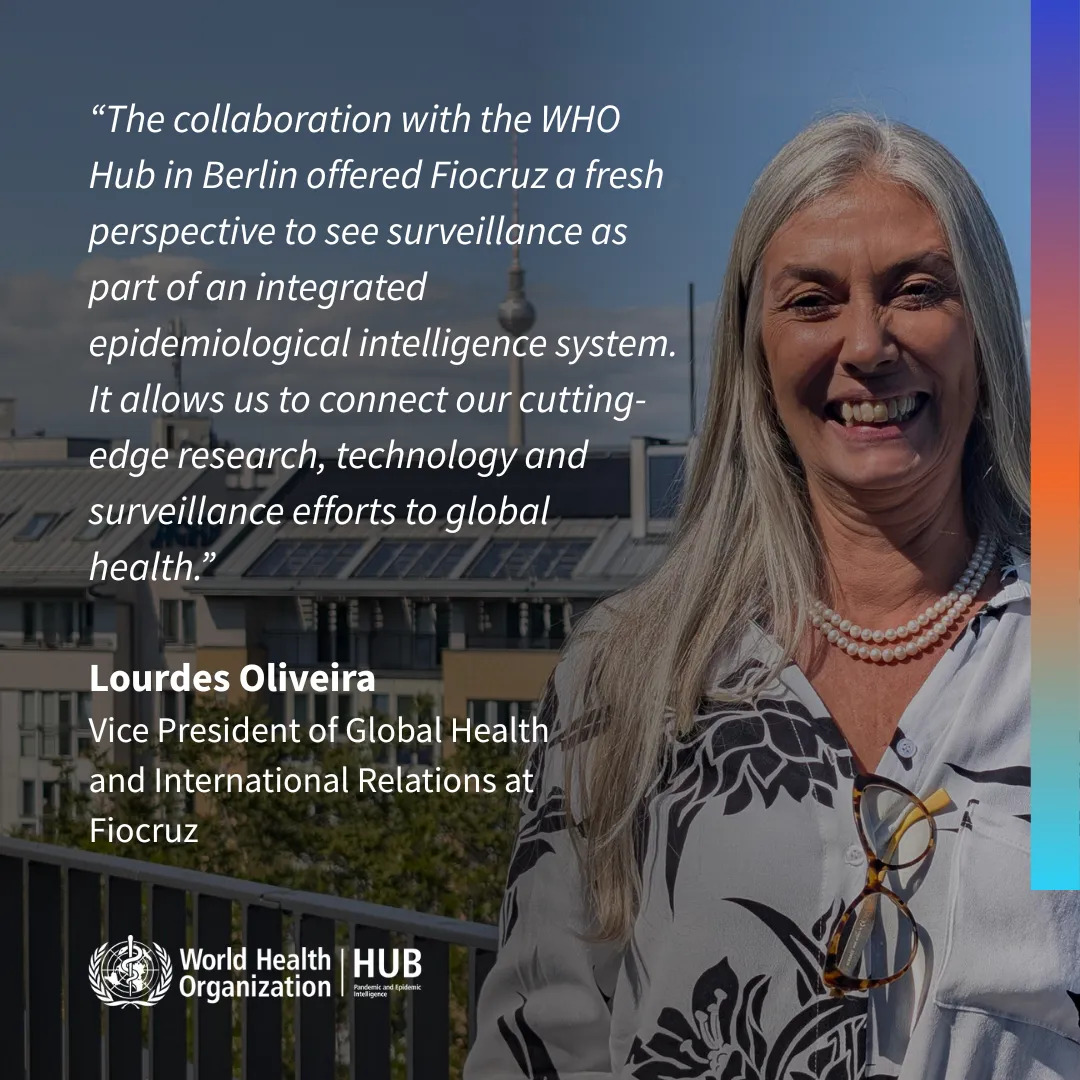
Our partnership is based on two key pillars: data-based surveillance and pathogen genomic surveillance. Fiocruz has experience in both areas, and the cooperation with the WHO Hub provides an opportunity to share knowledge, platforms and tools to advance and accelerate the global response to pandemics and epidemics.”
➡️Read the full interview with Dr Maria de Lourdes Aguiar Oliveira.
What to read
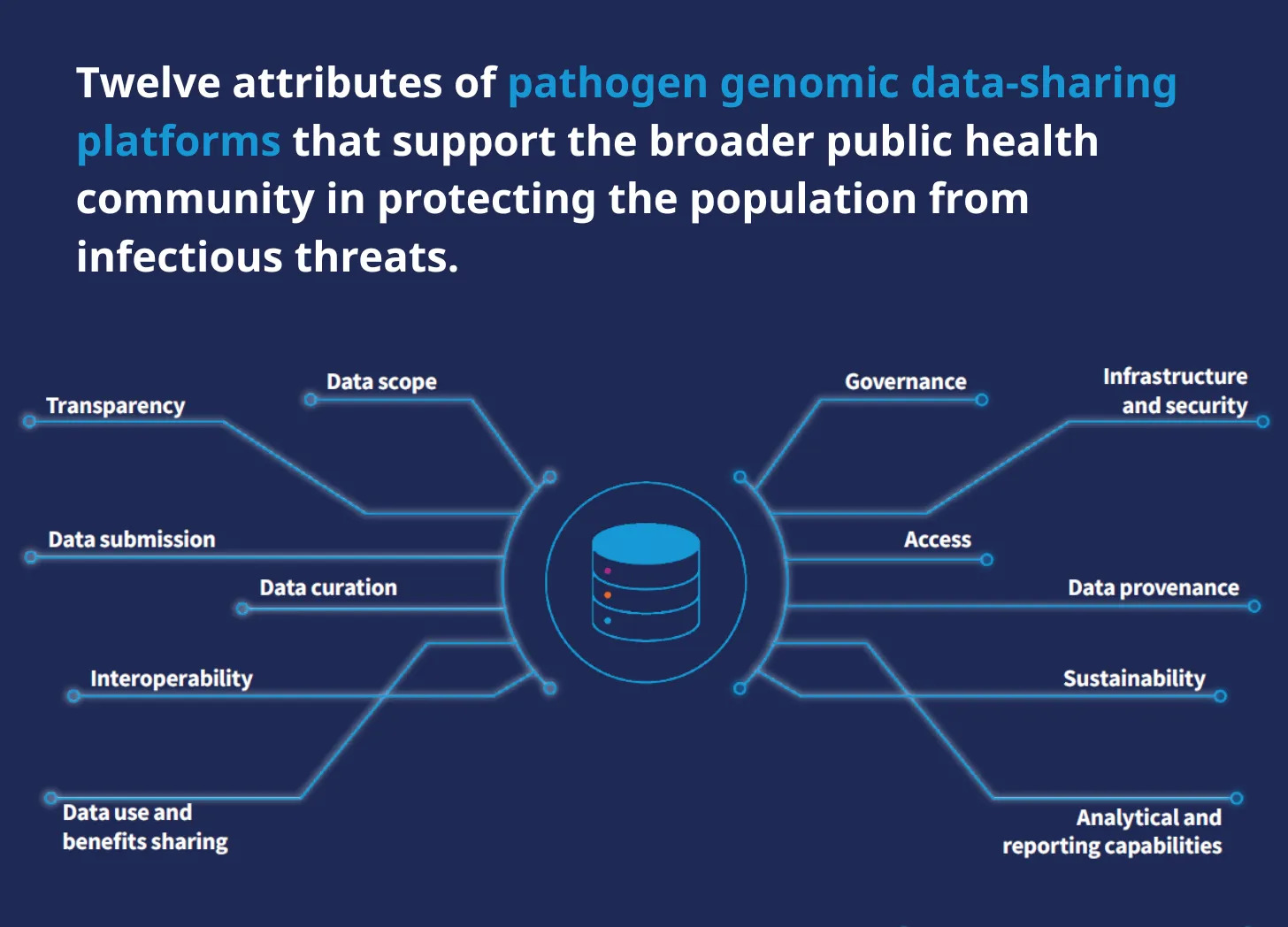
WHO’s latest report lays out criteria for pathogen genomic data-sharing platforms to support effective, timely and equitable sharing of genomic data from pathogens with epidemic and pandemic potential. It outlines key features that make these platforms trustworthy and effective, aiming to improve existing platforms and guide the creation of new ones. This work also supports global efforts, such as the Pandemic Agreement, to make data-sharing more equitable and impactful.
➡️ Read and download “Attributes and Principles of Pathogen Genomic Data-Sharing Platforms”
➡️ Scroll down for more info on our upcoming webinar on this topi
What to watch
Over the past two years, the WHO Hub in Berlin, the WHO Regional Office for the Eastern Mediterranean and the Robert Koch Institute have supported teams in Egypt, Lebanon, Jordan and Djibouti, to strengthen their public health intelligence capacities. Through capacity building, community strengthening, tailored technical support and by fostering the trusted networks that are essential for effective preparedness and response, the countries are now better equipped to detect, assess and respond to health threats faster and more effectively.
What to listen
What does the rapid rise of AI mean for health professionals? How can these tools be used ethically and effectively, from predicting disease risks to summarizing doctor notes? Tune into our brand-new podcast to find out how AI can be applied to real-world public health challenges. In our first episodes, Oliver Morgan, Head of the WHO Hub in Berlin speaks with Kene David Nwosu, Epidemiologist and Data Scientist at the University of Geneva’s Institute of Global Health and Co-Founder of The Graph Courses, and Gautam Prasad, Software Engineer at Google Research.
➡️ Listen now to the Innovation Forum AI podcast on YouTube, Spotify, Apple Podcasts or Amazon Music.

Upcoming events and opportunities
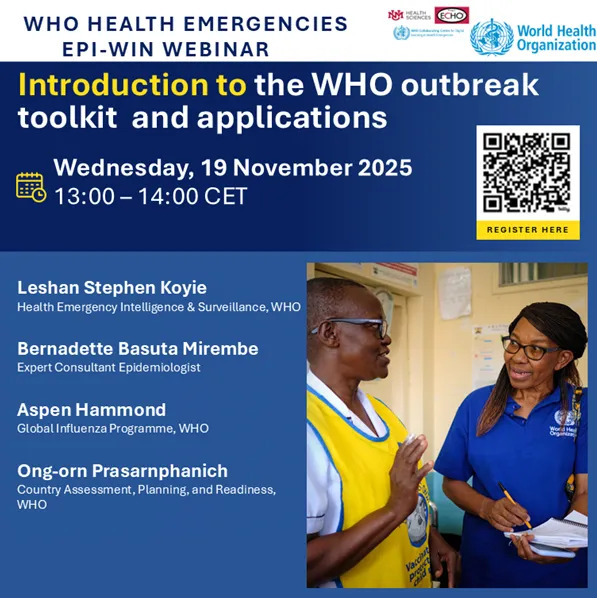
19 November - WHO EPI-WIN Webinar: Introduction to the WHO outbreak toolkit and applications
The WHO Outbreak Toolkit supports epidemiologists and field investigators working on the frontline of complex emergencies and in resource-limited settings. It provides a comprehensive, up-to-date set of tools for investigating both infectious disease outbreaks and non-infectious events and hazards. Join this WHO EPI-WIN webinar to learn more about the toolkit and how it can be applied, for instance, in investigating outbreaks of zoonotic diseases such as avian influenza.
📅 Date: 19 November 2025, 1-2pm (CET)
🔗 Register and find out more
24 November – WHO EPI-WIN Webinar: Attributes of pathogen genomic data platforms supporting timely and equitable sharing
Join this webinar if you want to hear more about WHO’s new publication on “Attributes and principles of genomic data-sharing platforms supporting surveillance of pathogens with epidemic and pandemic potential”. The webinar will introduce the publication’s key concepts and highlight its utility to inform data-sharing practices for data generators, platform development and funding decisions.
📅 Date: 24 November 2025, 1-2pm (CET)
🔗 Register and find out more
4 December 2025 – Speaker Series
How can researchers contribute to a more effective response to disease outbreaks and other public health emergencies? Join us for our upcoming Speaker Series, to hear from the fellows of the Research Fellowship in Public Health Intelligence, that we launched earlier this year together with the Charité Center for Global Health.
📅 Date: 4 December 2025, 6:30 - 8:00 pm (CET), Berlin and online
🔗 Register and find out more

Follow us on LinkedIn!
The WHO Pandemic Hub is on LinkedIn! Follow us for regular updates in English and German on how we support public health intelligence communities worldwide with innovative solutions, knowledge-sharing networks and stronger systems for better decisions during epidemics and pandemics.
👉 Follow us and leave us a comment, share or like!