
WHO Hub for Pandemic and Epidemic Intelligence Speaker Series
Co-hosted by the WHO Hub for Pandemic and Epidemic Intelligence (“WHO Hub”) and the Charité Center for Global Health, the Speaker Series is a regular event series, with in-person and digital elements targeting public health communities in Berlin, Germany and globally. The series convenes multidisciplinary and cross-sector discussions around challenges and emerging opportunities in global pandemic preparedness and response that stem from the complex nature of public health emergencies.
Launched in 2022, the first season of the Speaker Series was themed around “Complexity of Pandemics” and convened six sessions to unpack the complexity of pandemics from the perspectives of human, animal and planetary health, social sciences, innovative technologies, data preparedness, open source, and climate change. The second season, launched in 2024 under the theme of “Protecting the World: Moving Rapidly Together”, explored how to protect the world from future health emergencies by leveraging diversity, contextual insights, the role of research, genomic data, artificial intelligence, as well as bridging research and practice. A YouTube playlist of previous sessions can be found here.
A new season of the Speaker Series was launched in 2026, focusing on “From Insight to Impact: Transforming Public Health Intelligence”. Season 3 explores how data, insights, and innovation in public health intelligence can transform preparedness systems, strengthen decision-making, and drive impact at the country, regional, and global levels. It aims to highlight advances in surveillance capabilities, threat detection platforms, research, analytics and simulations, as well as AI, data and digital foundations, all driving actionable, system-wide, and lasting transformation in pandemic and epidemic preparedness.
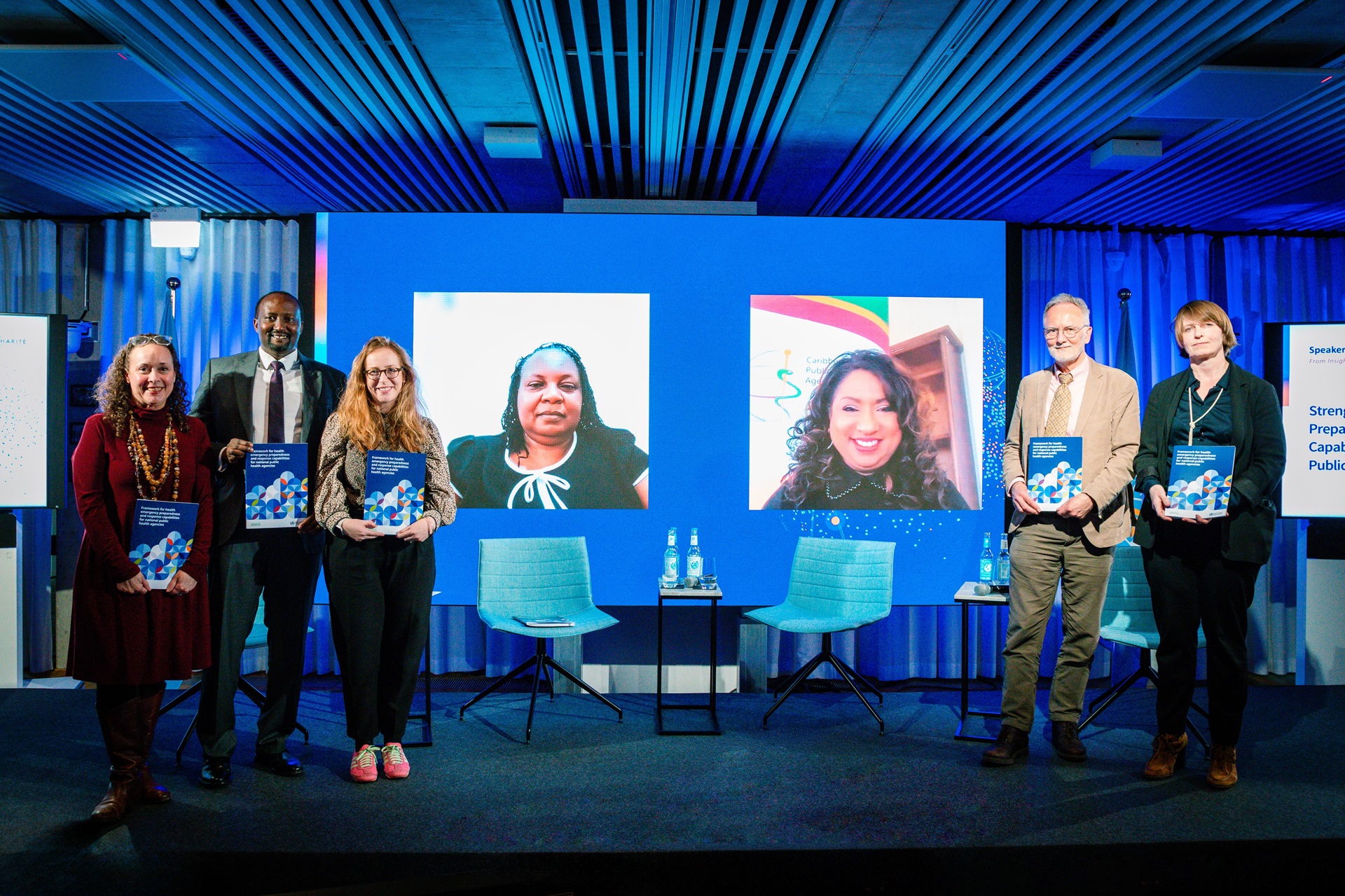
The 13th session of our Speaker Series
Strengthening Emergency Preparedness and Response Capabilities for National Public Health Agencies
took place on 26 March 2026.
Past events
Season III: From Insight to Impact: Transforming Public Health Intelligence
Season II: Protecting the World: Moving Rapidly Together
Speaker Series: A Laboratory for Collaboration: Leveraging Diversity for Better Decision-Making
Add to:
The seventh instalment of the Speaker Series is co-hosted with the Charité Center for Global Health, and will be an integral part of the Collaboratory Summit 2024. The Collaboratory is an initiative of the WHO Hub for Pandemic and Epidemic Intelligence and aims to establish a digital environment where the pandemic and epidemic intelligence community can convene to address critical challenges that affect the way data is accessed, analysed, visualised, and communicated for pandemic and epidemic policy and response decision-making.
Speaker Series N°7 - Protecting the World: Moving Rapidly Together
The seventh instalment of the Speaker Series is co-hosted with the Charité Center for Global Health, and will be an integral part of the Collaboratory Summit 2024. The Collaboratory is an initiative of the WHO Hub for Pandemic and Epidemic Intelligence and aims to establish a digital environment where the pandemic and epidemic intelligence community can convene to address critical challenges that affect the way data is accessed, analysed, visualised, and communicated for pandemic and epidemic policy and response decision-making.
The COVID-19 pandemic has highlighted important gaps and challenges in the way the public health and pandemic and epidemic intelligence (PEI) communities access, analyse, and use information to prepare for and respond to pandemics and epidemics. The PEI communities face common challenges such as inability to access tools or expertise, fragmentation and inaccessibility of data, discoverability of contextual data or relevant code or models, lack of transparency or comparability, and little possibility of federated analysis and insights that are not always translated well for decision makers.
This Speaker Series N°7 session will focus on exploring how to leverage diversity in pandemic and epidemic intelligence to support better public health decision-making. From engaging marginalised communities to enabling multi-disciplinary collaborations, from fostering cross-sector partnerships to embracing regional and country context diversities, this session will convene a diverse set of public health professionals, academics, epidemiologists, data scientists, developers, modelers, and policy makers globally to unpack existing bottlenecks, share good practices and learnings, and explore potential opportunities and pathways that will help enhance the diversity in pandemic and epidemic intelligence so we can be collectively better prepared for future public health emergencies.
Participants can join the event either in person in Berlin or online via WHO YouTube Livestream. Due to space limitation in the event venue, on-site registration is on a first come, first served basis. You are encouraged to register for the event at your earliest convenience.
Speakers
Professor Sheetal Silal | Speaker

Director, Modelling and Simulation Hub, Africa (MASHA), University of Cape Town; Honorary Visiting Research Fellow in Tropical Disease Modelling, Oxford University
Prof Sheetal Silal’s primary research area is mathematical transmission models of vector-borne diseases and vaccine preventable diseases in South Africa, sub-Saharan Africa and globally, with a focus on supporting policy development and implementation. She recently led the development of the COVID-19 dynamic transmission models as part of the South African COVID-19 Modelling Consortium for the Government of South Africa. She is the Chair of the WHO Immunization and Vaccine Implementation Research Advisory Committee and a member of the WHO Collaboratory Technical Advisory Group.
Professor Jodie McVernon | Speaker
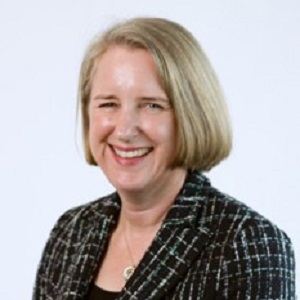
Professor and Director of Doherty Epidemiology, Doherty Institute, University of Melbourne
Prof Jodie McVernon is a public health physician and epidemiologist. For the past 18 years she has been building capacity in infectious diseases modelling in Australia and the region to inform immunization and pandemic preparedness policy. She has led nationally distributed networks of modellers informing responses to the 2009 H1N1 influenza pandemic and the COVID-19 pandemic. Her particular interest is in the heterogeneity of impact of infectious diseases, including interventions for their control, and the need for a whole of society lens in preparedness and response.
Dr Anne Cori | Speaker
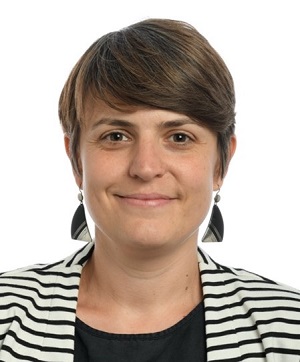
Senior Lecturer in Infectious Disease Modelling, Imperial College London
Dr Anne Cori develops statistical methods and tools for the analysis of epidemic data. She is particularly interested in emerging infections, and contexts where data are scarce and statistical methods can be developed to answer important public health questions despite these limitations in data. She is the author of the R package EpiEstim. Her research mainly focuses on viruses including SARS-CoV-2, Ebola, influenza and HIV. She is a keen supporter of efforts to promote diversity in the epidemic modelling community.
Dr Uyi Stewart | Speaker
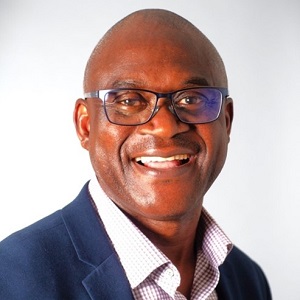
Chief Data and Technology Officer, data.org
Dr Uyi Stewart oversees data.org’s programmatic initiatives in capacity building and the development of digital public goods to train 1 million purpose-driven data practitioners for social impact globally, by 2032. He has over 25 years of experience in research and implementation of data science and artificial intelligence solutions in both private and non-profit sectors across Africa, Asia, LATAM, and North America. He holds a Ph.D. in Linguistics from McGill University and a M.Phil. from Cambridge University. He is a Fellow of Cambridge Commonwealth Society and was appointed IBM Distinguished Engineer for his pioneering work to co-found IBM Research – Africa (Nairobi). He has received numerous recognitions for his work in digital transformation to uplift the vulnerable and marginalized, including Black Engineer of the Year 2014 – Outstanding Technical Contribution – Industry, USA.Industry, USA.
Dr Julia Fitzner | Moderation
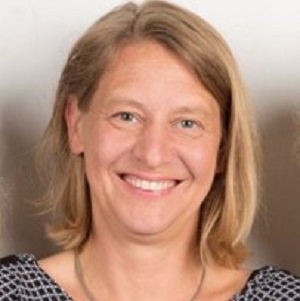
Unit Head of Insights and Analytics, WHO Hub for Pandemic and Epidemic Intelligence
Dr Julia Fitzner is a Medical Doctor and Epidemiologist. At the WHO Hub for Pandemic and Epidemic Intelligence, her work has focused extensively on enabling data reporting and analysis from different sources from around the world, covering the complete cycle from defining surveillance objectives, data collection, data harmonization, analysis, reporting, training, and evaluation. Her passion is to enable the use of data so that it is least burdensome and most impactful for decisions outbreaks, epidemics, or pandemics.
Prof Vernon Lee | Moderation
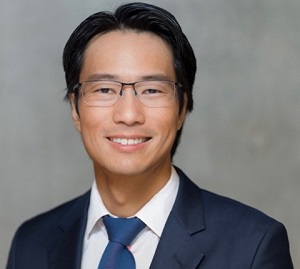
Executive Director of the National Centre for Infectious Diseases Singapore
Prof Vernon Lee is a preventive medicine physician with extensive global health experience in pandemic preparedness and response, infectious disease epidemiology and health policy and management. He played a key role in developing and implementing Singapore’s COVID-19 pandemic response, and has responded to the 2003 SARS outbreak, 2009 influenza pandemic, and 2016 Zika outbreak in Singapore. He previously served as Advisor to the Assistant Director General for Health, Security and Environment at the WHO headquarters in Geneva; Medical Epidemiologist in the WHO Country Office in Indonesia; and Head of the Biodefence Centre in the Singapore Armed Forces.