

10 ways the WHO Hub in Berlin keeps the world safe
At the WHO Hub for Pandemic and Epidemic Intelligence, we work with experts from around the world so they can use the latest innovations to detect and understand new public health threats as quickly as possible, whenever and wherever they occur.
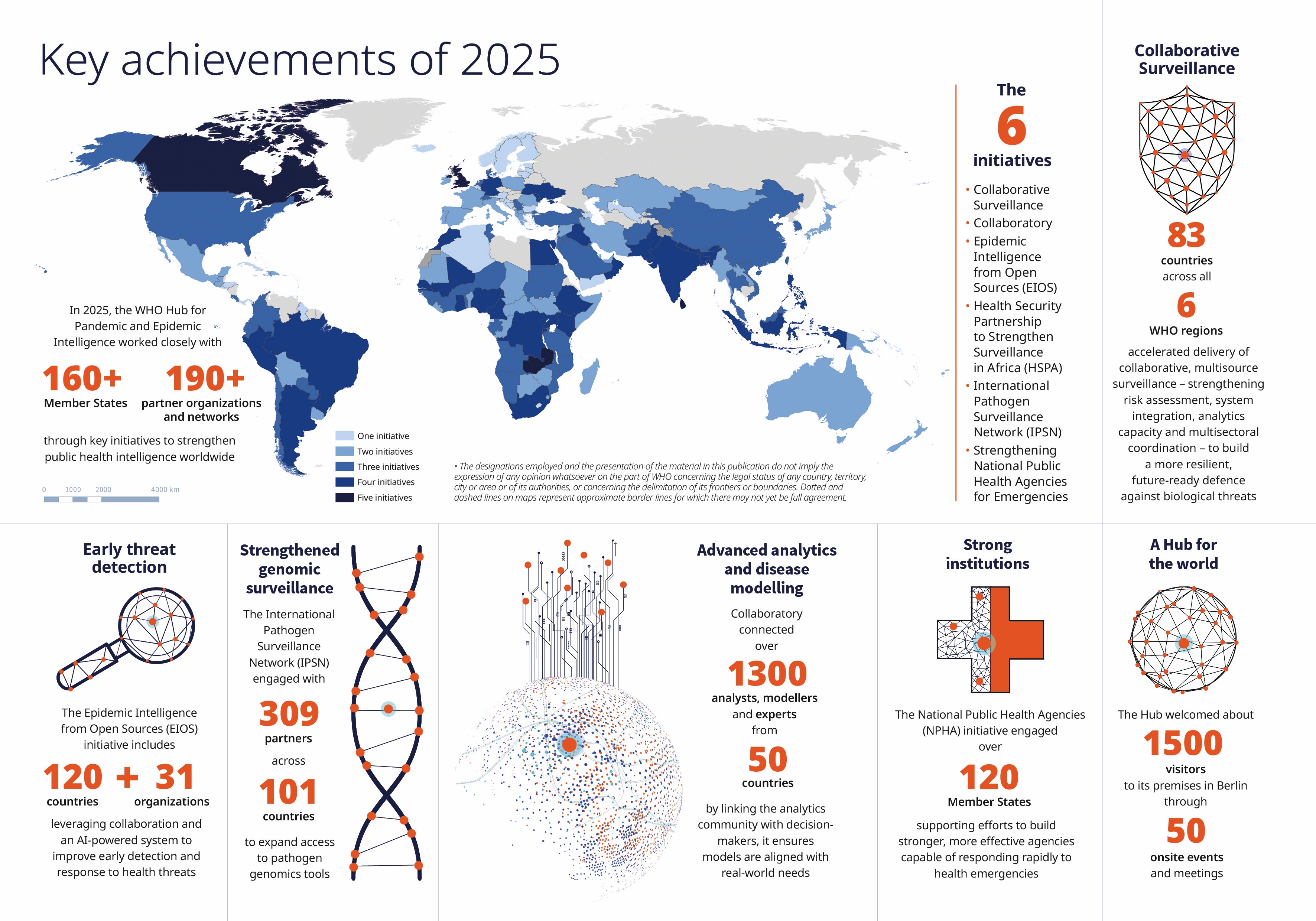
Based on our achievements in 2025, here are 10 actions guiding our work in 2026 and beyond.

1. Using cutting‑edge DNA science to predict pandemics
The WHO Hub in Berlin is making DNA science available for all countries so they can detect new pathogens, such as viruses and bacteria, and help scientists. This also helps scientists understand how they spread and how dangerous they may become. By examining the smallest components of pathogens, it is now possible to anticipate some of the world’s biggest health threats and do this faster than ever before.
Through the International Pathogen Surveillance Network (IPSN), the WHO Hub in Berlin is working with 309 partners in 101 countries to expand access to these technologies.

2. Treating public health as a priority for national security
Threats from infectious diseases are increasing, while global politics are becoming more complex. Countries need strong public health systems to detect infectious disease threats so they can protect their citizens.
In 2025, the WHO Hub in Berlin worked with more than 160 countries and over 190 partners to build this essential health security infrastructure.
Investing in strong public health intelligence makes societies and economies more resilient to pandemic and epidemic shocks.
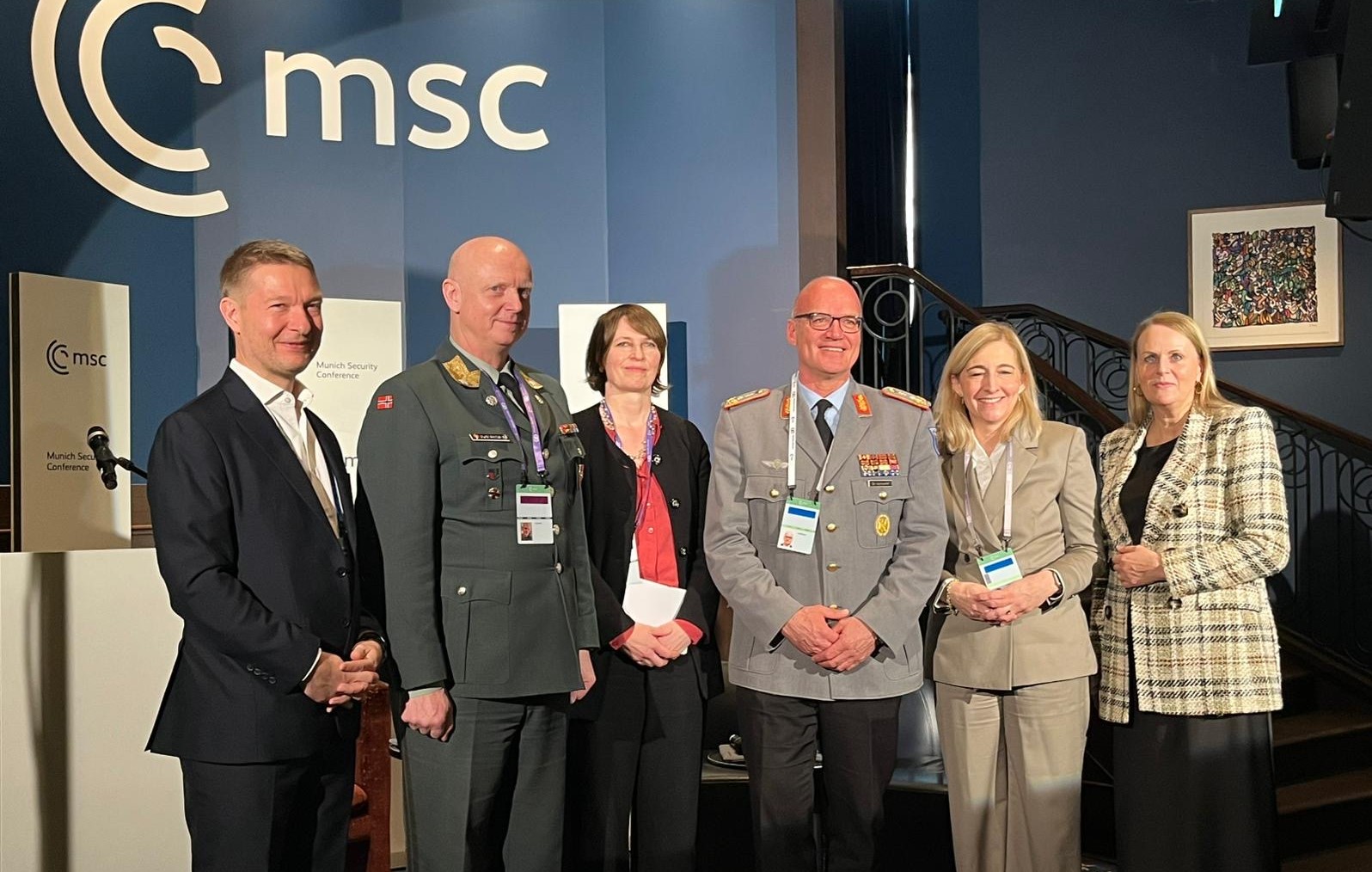
Read more about the WHO Hub at the Munich Security Conference
3. Working smarter and faster with AI
Artificial intelligence (AI) is transforming how we detect disease outbreaks. Large datasets that previously took months to collect and interpret can now be analysed in near real-time to identify emerging threats.
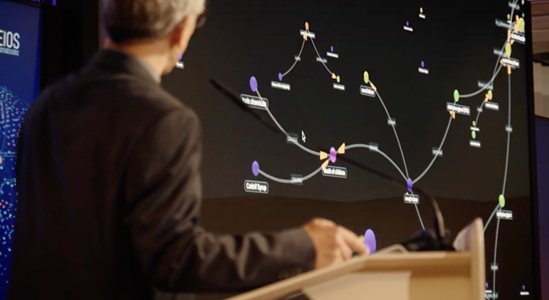
In 2025, the WHO Hub in Berlin launched the latest version of the Epidemic Intelligence from Open Sources (EIOS) system that has even more AI capabilities. It scans publicly available sources globally and helps experts quickly spot when something unusual is happening.
We are also promoting practical applications of AI by launching a podcast where top thinkers discuss how AI and data science are changing epidemic and pandemic intelligence.
4. Unlocking data from across society for health security
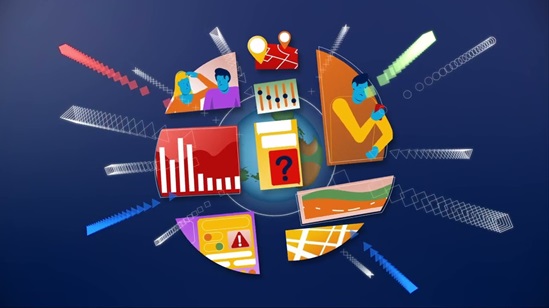
To detect and stop the spread of disease, health data alone are not enough. The WHO Hub in Berlin works with countries to combine health data with information about climate, animal health, travel, migration and other areas. This collaborative approach leads to a more comprehensive and real-time understanding of health threats.
In 2025, 83 countries across all 6 WHO regions started to implement this Collaborative Surveillance approach.
5. Exploring how simulations can stop outbreaks in their tracks
The WHO Hub in Berlin is building an AI-powered pandemic simulator to help decision-makers respond more effectively to disease outbreaks.
The prototype platform uses complex calculations to compare outbreak scenarios and help identify effective disease control measures.
6. Connecting global experts to understand disease threats
The WHO Hub in Berlin connects over 1300 data analysts, modellers and other experts from 50 countries and 200 institutions.
We have done this by creating a unique digital space, called the Collaboratory, allowing experts to work together on sophisticated statistical models to understand the spread of infectious diseases.
By linking experts globally through the Collaboratory, we provide countries access to latest prediction models for responding to disease outbreaks.
7. Local capacity with global impact
Spotting and assessing potentially life-threatening outbreaks requires highly skilled public health intelligence professionals.
The WHO Hub in Berlin supports these experts to develop their skills so they can use the latest tools, such as the Epidemic Intelligence from Open Sources system.
In 2025, we launched the Public Health Intelligence Competency Framework and Curriculum. to support professionals and institutions worldwide.
-in-the-eastern-mediterranean-region-tn.tmb-549v.png?Culture=en&sfvrsn=d12258ef_1)
8. Strengthening national institutions for the digital age
National Public Health Agencies (NPHAs) form the backbone of a country’s ability to prepare for and respond to health emergencies.
In 2025, the WHO Hub in Berlin supported over 120 countries in building or improving these agencies by offering guidance, sharing good practices and helping countries learn from one another.
9. Connecting partners for global impact
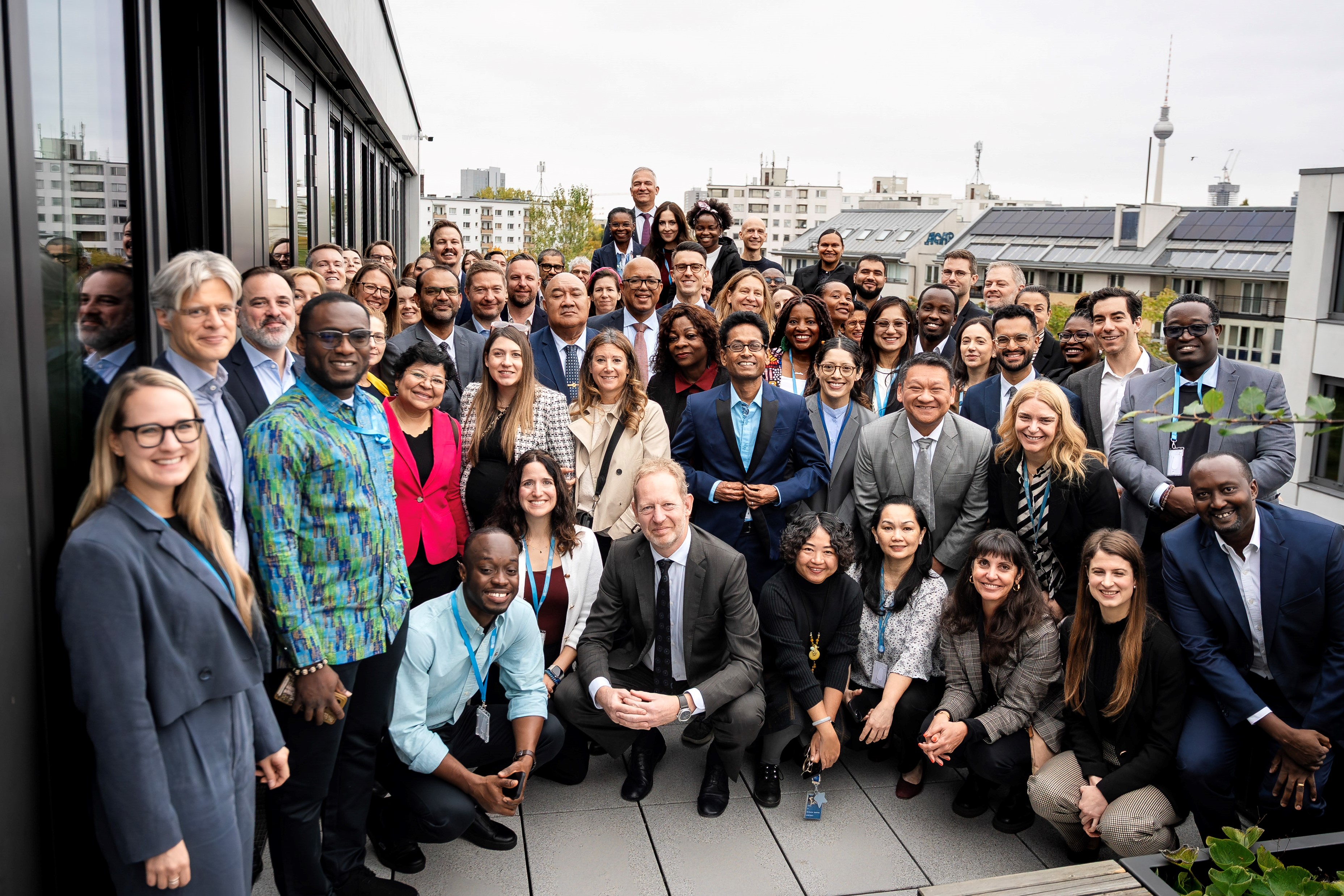
The WHO Hub in Berlin brings together a wide range of partners, including governments, public health agencies, universities and private companies, to strengthen public health intelligence worldwide. In 2025, the WHO Hub in Berlin welcomed about 500 visitors to its premises through 50 onsite workshops and events.
With our long-standing partners, the Charité Center for Global Health and the Robert Koch Institute, we bring researchers and public‑health experts to Berlin for several months to work on projects together.

10. Building strong foundations for the future
For better public health intelligence, countries need strong data systems, clear rules about how data are used, and public health specialists who can use the latest tools to analyse the data.
The WHO Hub in Berlin is helping to strengthen these foundations so that countries can use the latest digital technologies to create a global system for detecting health threats wherever they occur.
What is public health intelligence?
Public health intelligence is the process of collecting and analysing information from hospitals, laboratories, climate data, online news and other sources, and turning it into clear, practical advice. This advice helps governments act fast and protect people from disease outbreaks and other health threats.